Photogenic autumn colour and deer in Nara
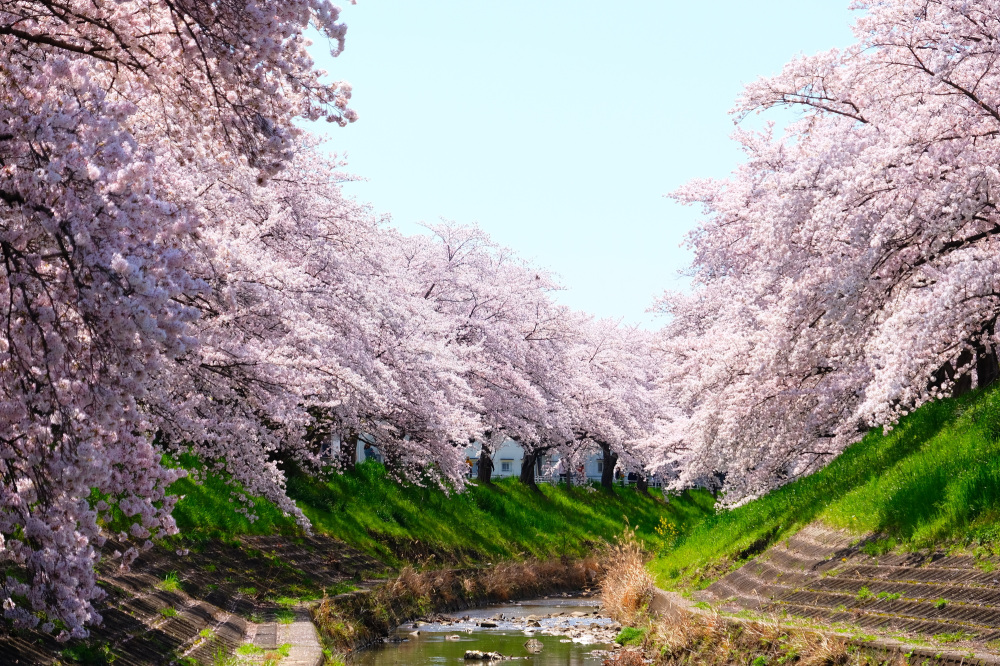
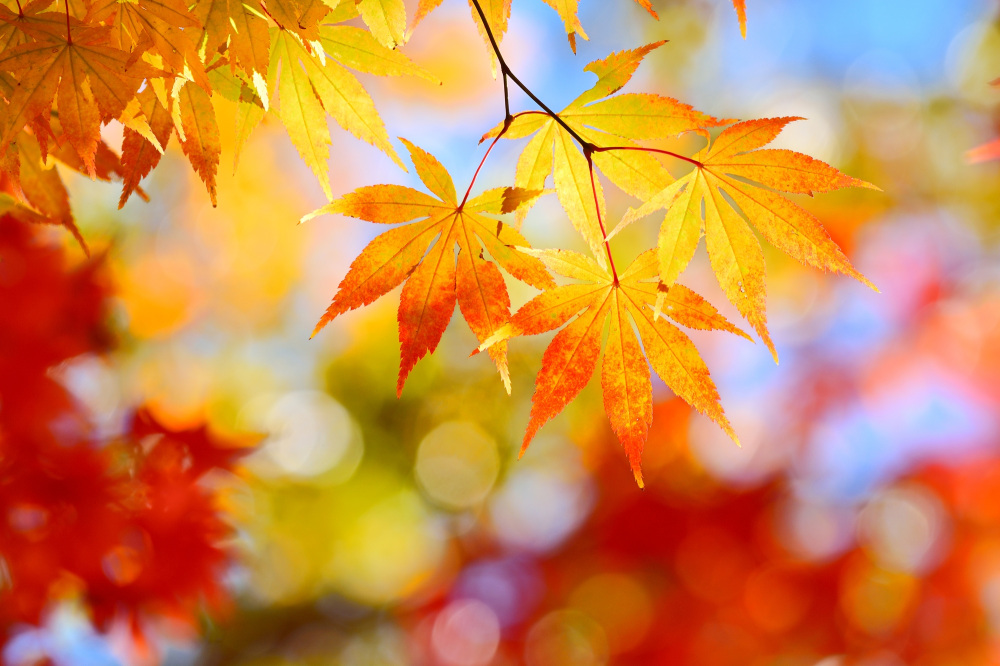
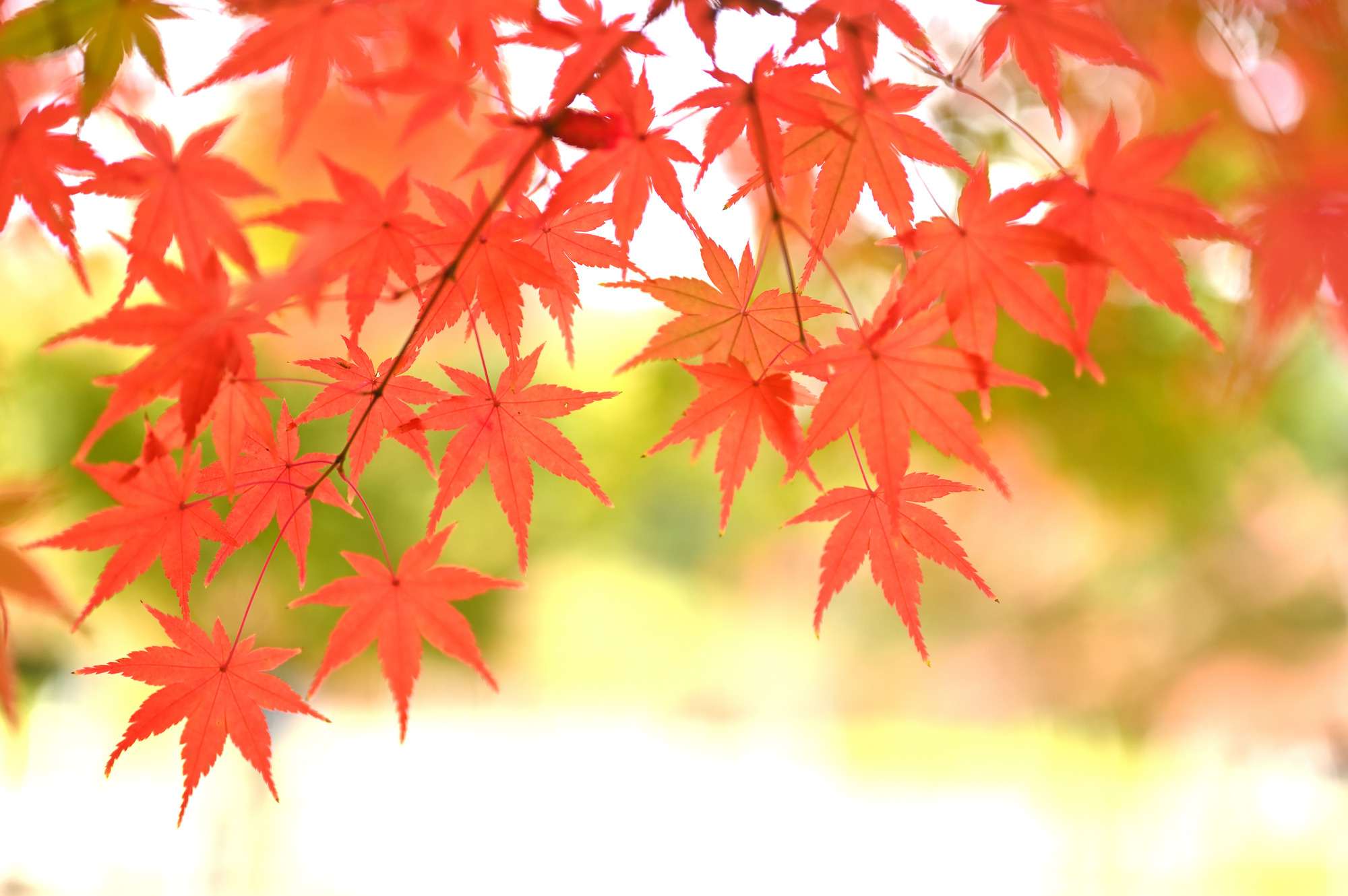
In autumn, the many trees in Nara Park, including cherry, maple, and ginkgo, form a glowing tapestry, a visually stunning display of colour. A timeless scene to wander through, camera in hand. Covering more than about 1,600 acres, wherever you stop to admire the autumn colour in the park you’ll see a different aspect. The many faces of Nara are waiting to be enjoyed, including the Heijo Palace Site Historical Park, where you’ll experience something of what the ancient Nara Period (710-784) must have felt like.
INDEX
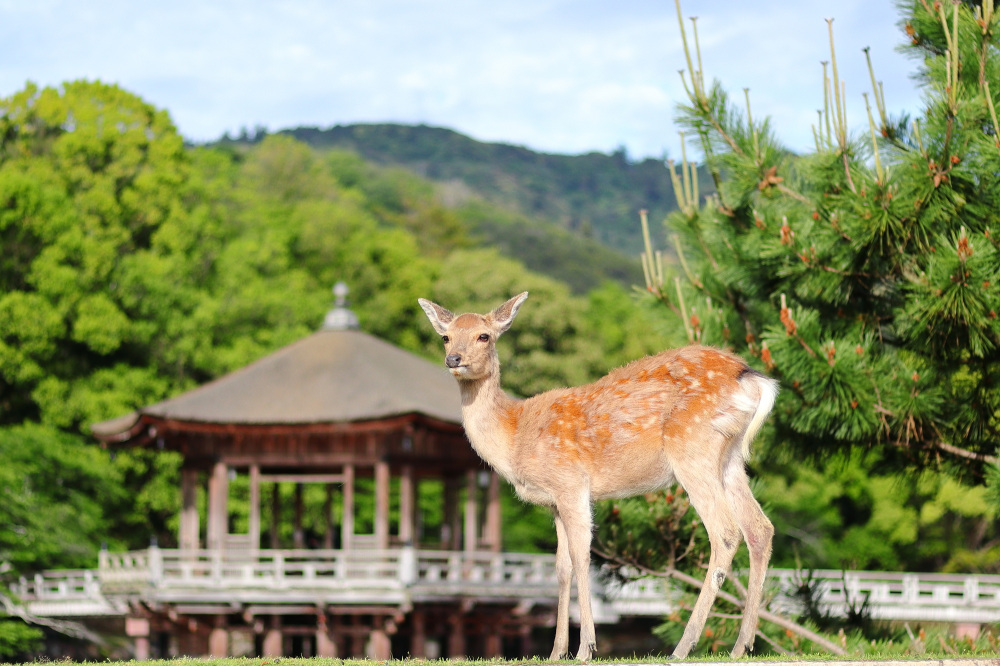
- The Ukimidō area A photo opportunity featuring deer and the Ukimidō reflected in the pond
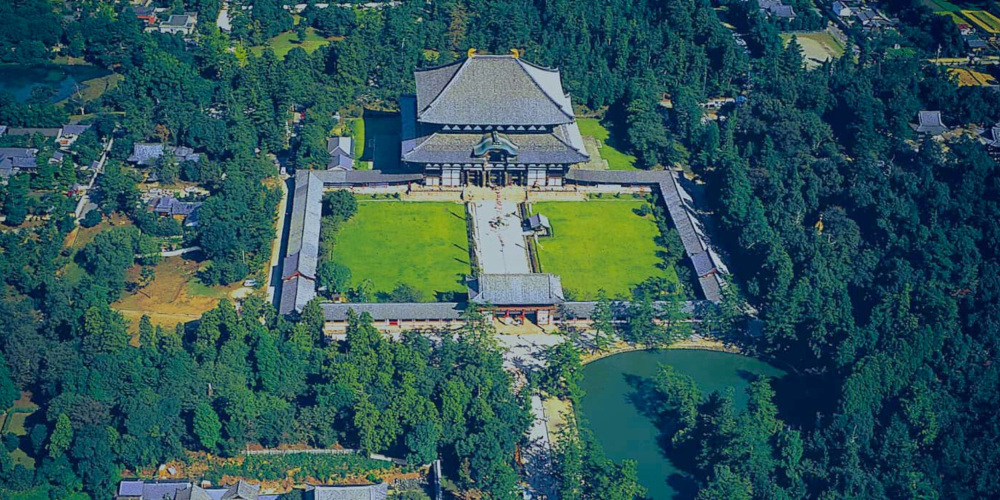
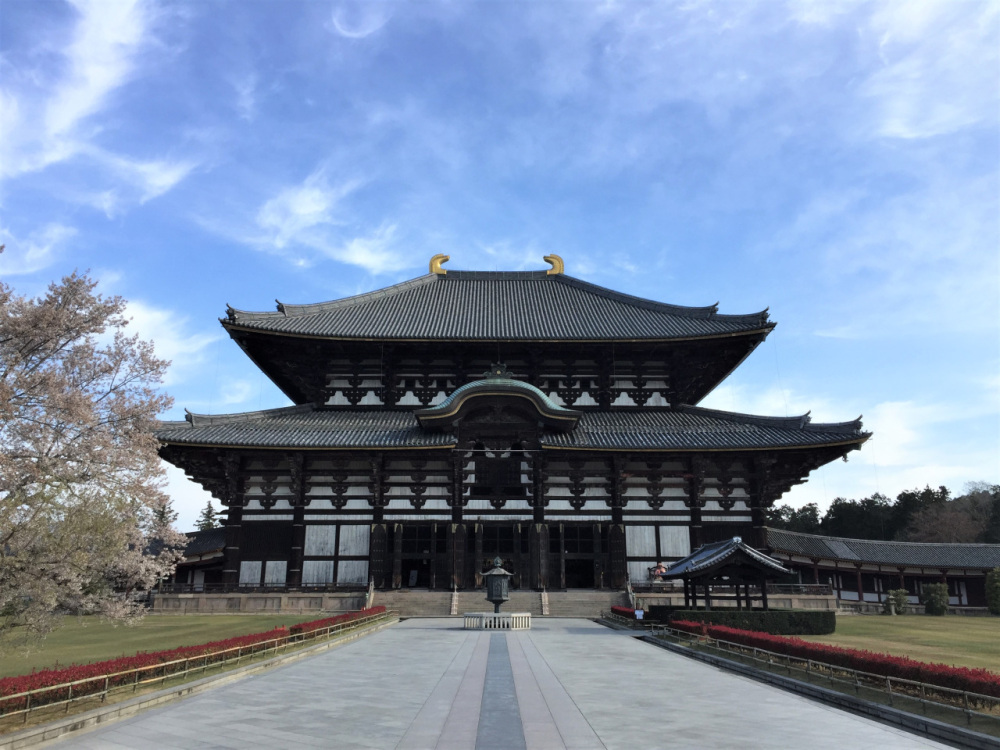
- The Todaiji Temple Daibutsuike Pond area A view of the Daibutsuden Hall reflected in the pond and colourful autumn leaves
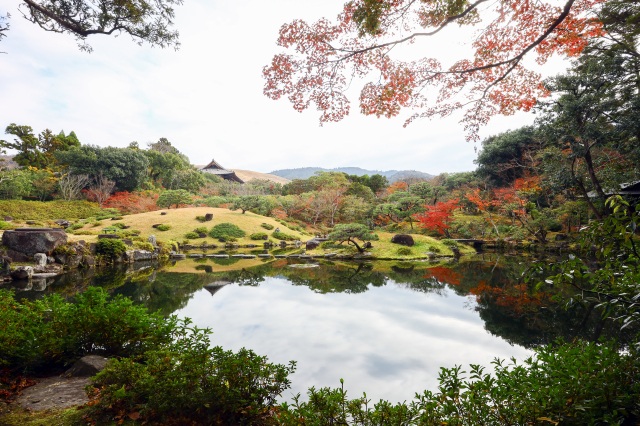
- Beautiful Isuien Gardens Two landscaped strolling gardens featuring Enkianthus perulatus (a species of flowering plant in the family Ericaceae native to Japan) and Autumnalis makino winter flowering cherry
- Heijō Palace Remains area Autumn as would have been experienced by those in the Tenpyō Period (Emperor Shōmu’s reign 729-749). Step back in time to the Nara Period
Recommended spots in Nara Park
The Nara Park area is at the sightseeing heart of Nara. Routes which take in spots famous for their autumn colour include visits to Todaiji Temple, Kohfukuji Temple, and Kasugataisha Grand Shrine. Suggested routes can be done in reverse.
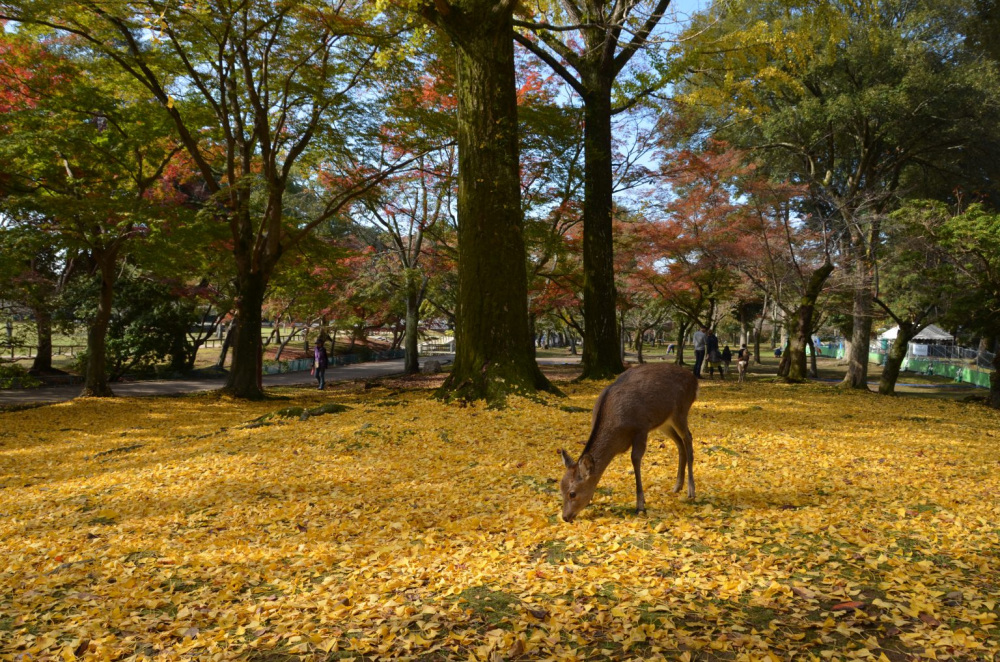
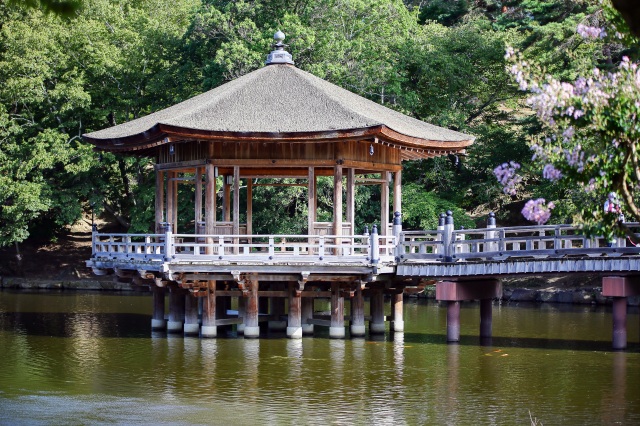
The Ukimidō area A photo opportunity featuring deer and the Ukimidō reflected in the pond
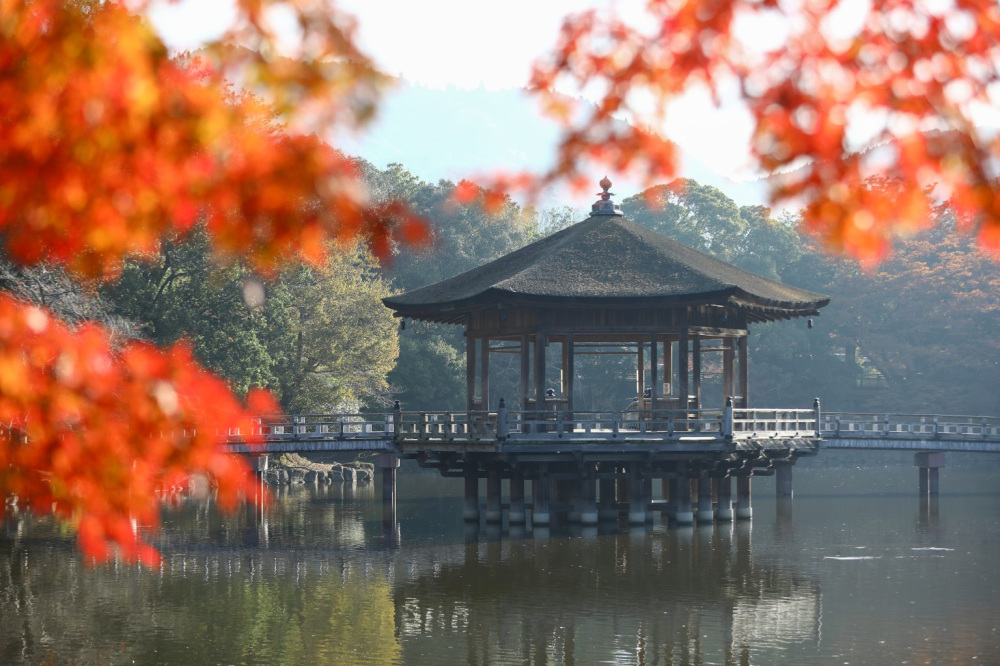
From JR Nara or Kintetsu Nara Stations, having visited Kohfukuji Temple, head for the Ukimidō Hall in the Asajigahara Enchi in Nara Park, right next to Kasugataisha Shrine. Rows of trees with particularly beautiful autumn foliage stand in the area around the hexagonal Ukimidō which appears to float on Sagiike Pond. You could take a single, magnificent picture of deer, the Ukimidō, and the autumn leaves.
The Todaiji Temple Daibutsuike Pond area A view of the Daibutsuden Hall reflected in the pond and colourful autumn leaves
To Todaiji Temple after having visited Kasugataisha Grand Shrine. Passing through the Nandaimon or Great South Gate with its giant, 8-meter tall Niō guardian statues, the path leads to the Daibutsuden or Great Hall. Having prayed to the Great Buddha, you might like to stroll to the area around the Daibutsuike Pond at the back of the hall. This a great spot to take photos, with the colourful ginkgo, maple, and other trees, and the hall framed by the backdrop formed by Kasugayama, Wakakusayama, and Mikasayama.
Beautiful Isuien Gardens Two landscaped strolling gardens featuring Enkianthus perulatus (a species of flowering plant in the family Ericaceae native to Japan) and Autumnalis makino winter flowering cherry
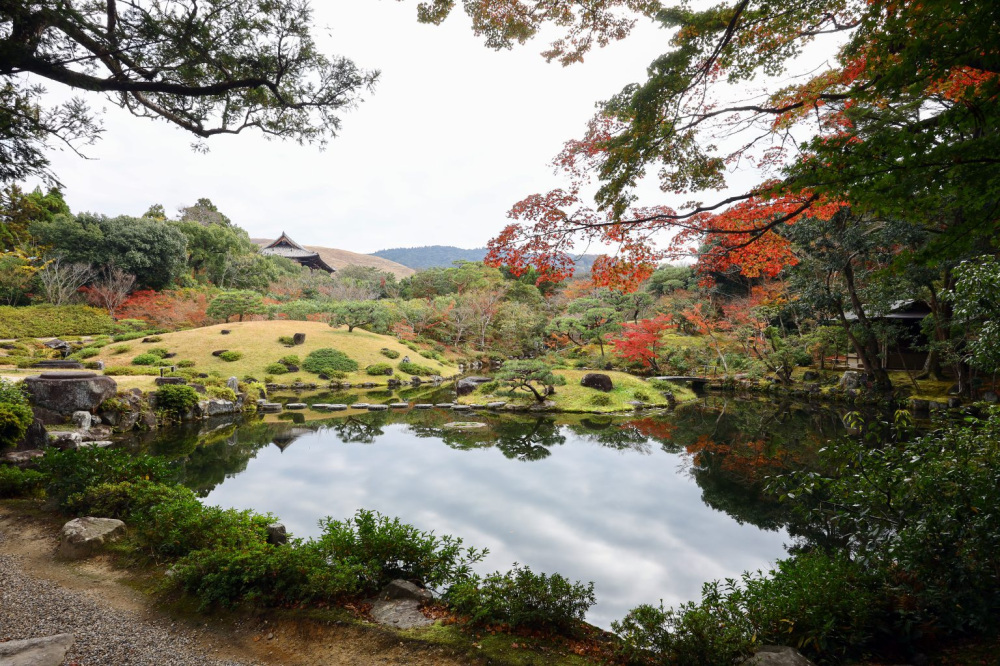
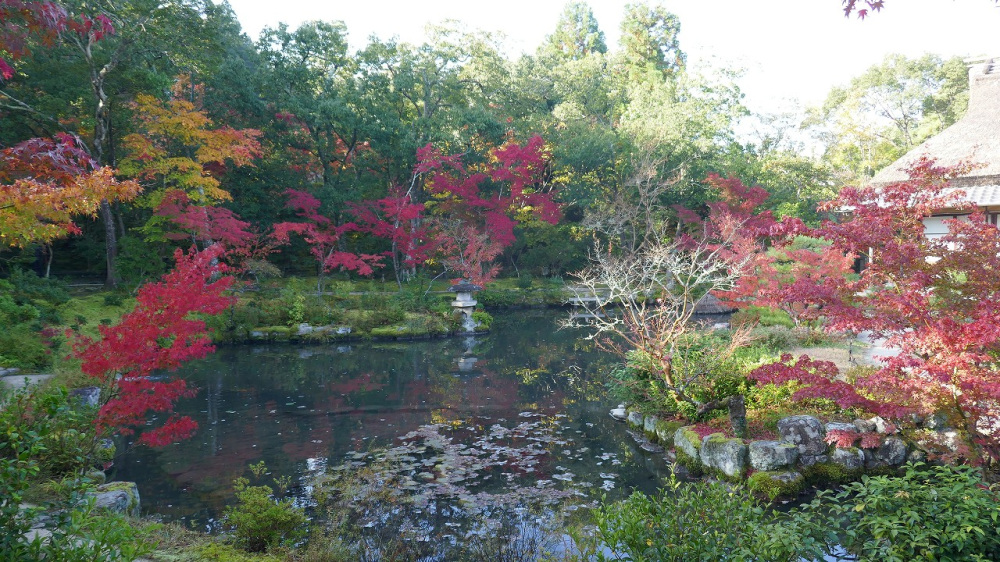
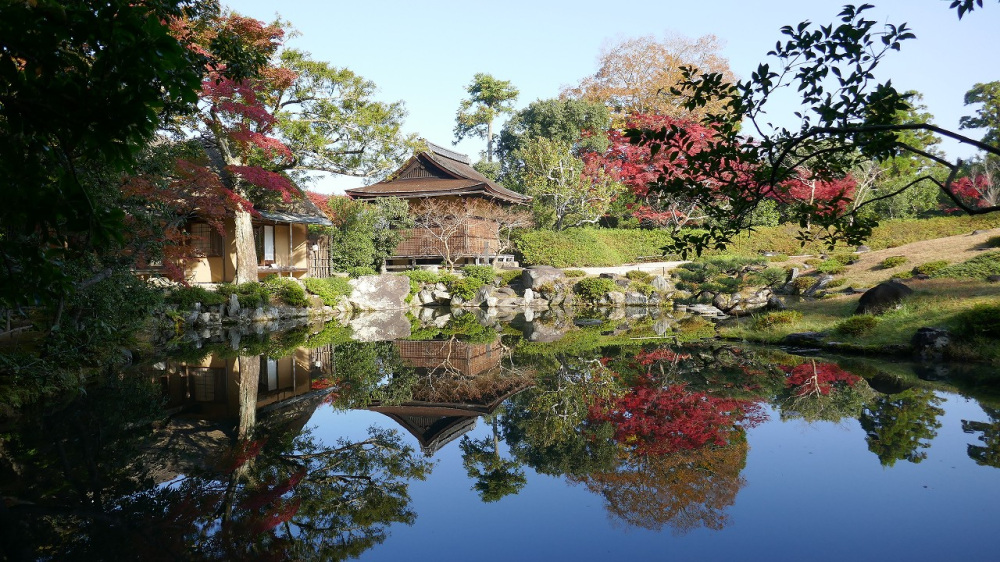
After visiting Todaiji Temple, you’ll find the Nara’s well-known strolling gardens, Isuien, if heading in the direction of the JR and Kintetsu Nara stations.
There are two adjoining gardens: the ‘Front Garden’ which dates from a time before the Edo Period (1603-1868), and the ‘Rear Garden’, which was created in the Meiji Period (1868-1912). On the same site is the Neiraku Museum. The museum has a collection and exhibitions of ceramics from China, Korea, and other countries, as well as Japanese tea utensils. The collection belongs to the Nakamura family which, over three generations, made their fortune in shipping. Walking in the garden you’ll see blazing red native azaleas (Enkianthus perulatus) and Japanese maples (Acer palmatum), as well as Jugatsuzakura (winter flowering cherry trees), a double cherry which blossoms twice a year, in late April and from October to December. You may like to rest for a bite to eat or green tea at the Sanshutei Tea House in the Front Garden.
Heijō Palace Remains area Autumn as would have been experienced by those in the Tenpyō Period (Emperor Shōmu’s reign 729-749). Step back in time to the Nara Period
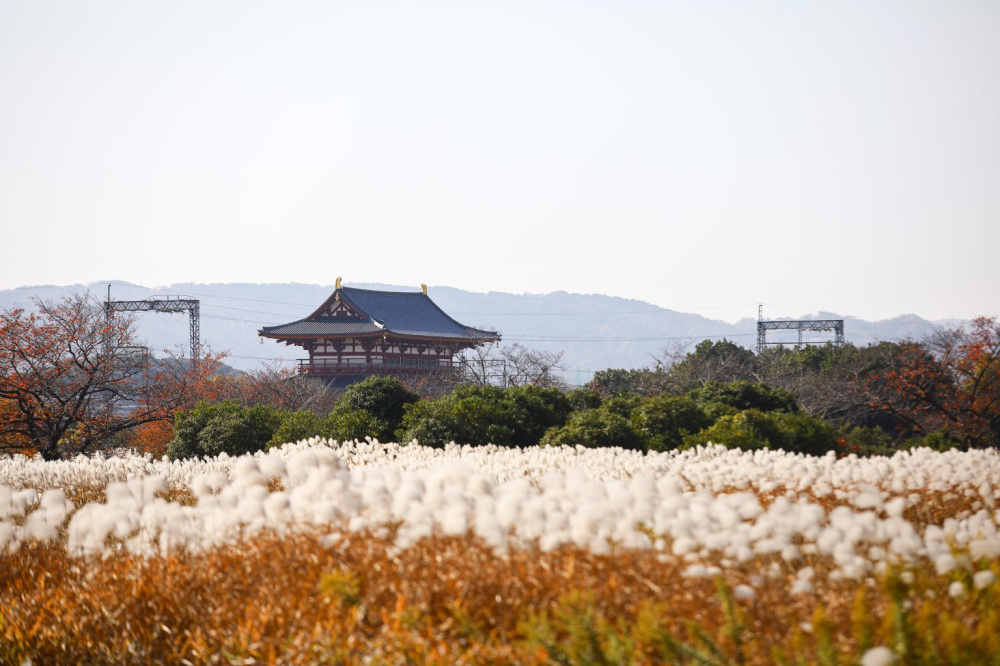
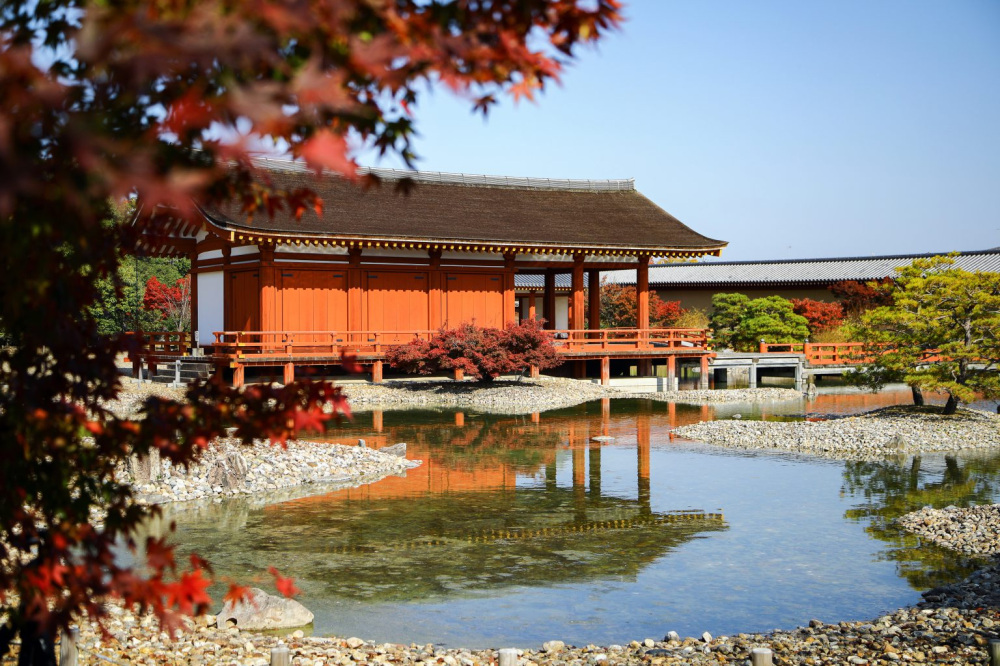
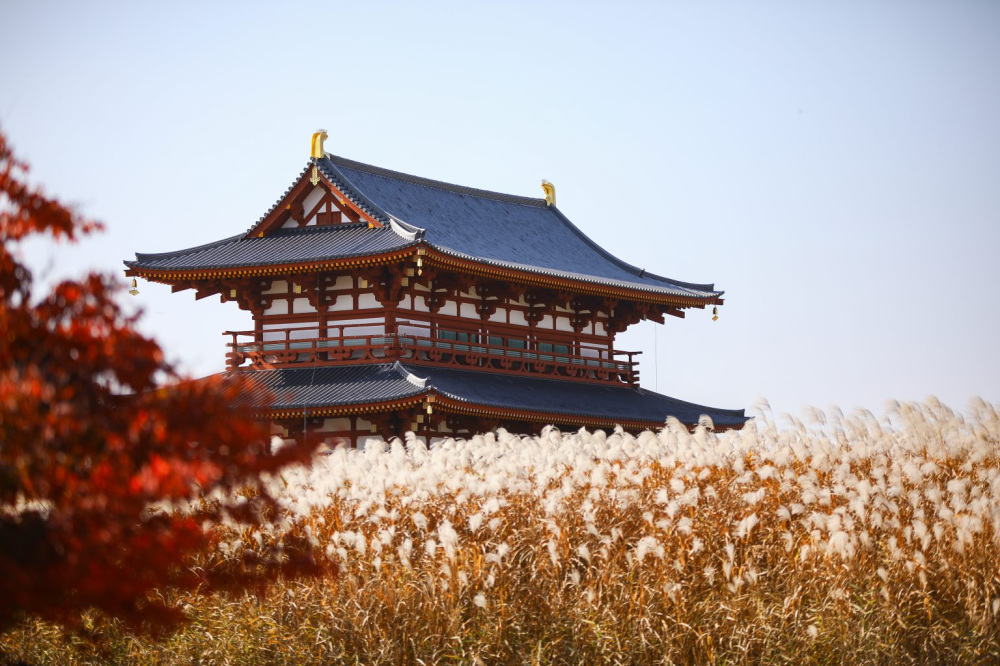
For those who’d like to extend their route slightly and discover Nara history and more of the cultural wonders of the past, we recommend getting a Gurutto Bus pass – which travels three routes around the city – and hopping on a bus on the Omiya route to the Heijō Palace Remains Park. The spacious, about 326 acre parkland is the site of the capital in the Nara Period. Conservation work had been carried out, and there has been some reconstruction.
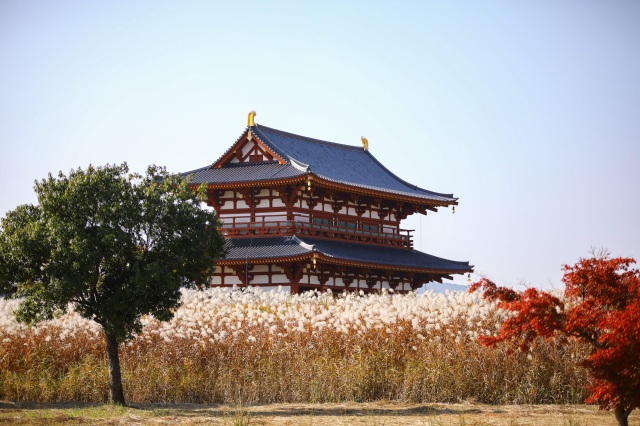
The Tōin Teien, or East Palace Garden, is one example. A garden where you’ll find a lovingly restored vermilion building set against a background of autumn colour.
Another attraction is the broad area of ogi or Japanese silver grass, a tall grass related to rice. The silver ears of ogi waving in an autumn breeze and the Suzakmon Gate together evoke a real sense of the culture which flourished here in the Nara Period (710-784).
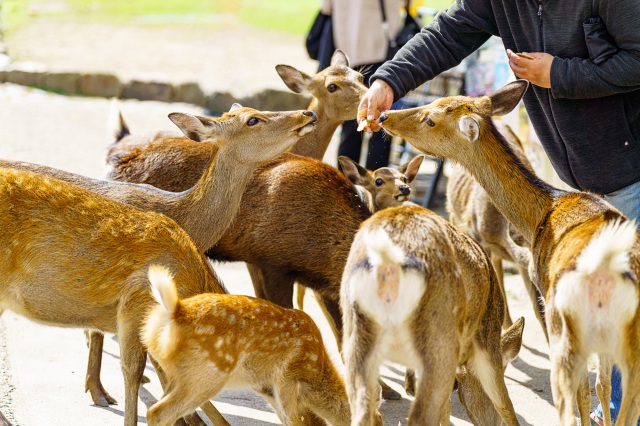
- Nara Park
- This vast park, spanning approximately 660 hectares, covers the eastern part of Nara City. It is a majestic park that befits the…
- See More
- Ukimido Gazebo
- The Ukimido Gazebo is a hexagonal gazebo with thatched cypress roofing floating over Nara Park's Sagi-ike Pond. Its geometri…
- See More
- Todaiji Temple
- Todaiji Temple and its principal image of the Great Buddha, widely known as Daibutu, represent Nara in all its aspects. Daibutsu…

- See More
- Isui-en Garden/Neiraku Museum
- Isui-en Garden was originally constructed by a Nara tanner, who lived within the garden grounds. The garden was designated as go…
- See More
- Nara Palace Site Historical Park
- The vast field stretching from Kintetsu Saidaiji Station to Shin-Omiya Station is the Heijo Palace Site (World Heritage). Locate…
- See More
- Shoryakuji Temple
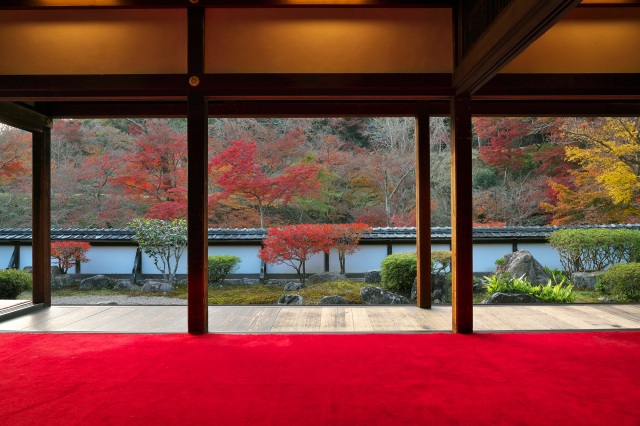
- Shoryakuji Temple is situated in the mountains on the outskirts of Nara. It was founded in 992 at the request of Emperor Ichijo.…
- See More