Guidance of Nara volunteer interpreter guide
◆Profile ◆World Heritage ◆Annual Events ◆Arts and Crafts ◆Transportation

New information
bas

            Kaizankisharie of Toshodaiji      


A registered World Heritage Site, Toshodaiji is a cultural asset of ancient Nara. It was founded by the priest Ganjinwajo (AD688-763) who finally succeeded in coming to Japan to preach Buddhism on his sixth voyage across the perilous seas from Yangzhou in China.
The Buddhist memorial service held with offering of cooked rice on the death anniversary of Ganjinwajo on 6 June is known as Kaizanki.
A special exhibition will be held at the Mieido Hall where Ganjiwajo is enshrined in conjunction with this occasion. Exhibits that are rarely shown in public, such as an ancient, sculptured statue of Ganjinwajo in a seated pose, a national treasure and great masterpiece, as well as a room partition painting (fusuma-ei) drawn by the master painter Higashiyamakaii, one of Japan’s representative artists, over a period of 10 years as a tribute to Ganjinwajo, will be on display during the exhibition. Please do not miss this chance to catch these great works of art.

  • Date & Time:

[Kaizankisharie] 5 Jun 2013 (Wed) – 6 Jun 2013 (Thurs) 8:30 - 17:00 (last entry at 16:30)
[Public exhibition of national treasure, the seated statue of Ganjinwajo & the Mieido Special Exhibition】5 Jun 2013 (Wed) – 9 Jun 2013 (Sun) 9:00 - 16:00

  • Venue: Toshodaiji
  • Access: About 10 minutes walking distance from Kintetsu Railways Nishinokyo Station, or take Nara Transportation Bus heading for Mount Rokujo (Service No. 63, 70, 72) for about 20 minutes and alight at Toshodaiji.
  • Entrance fees: Adult 600 yen, high school students 400 yen, elementary school students 200 yen  
  • ※Entrance fees for the special exhibition in Mieido are separately chargeable (adults 500 yen, high school students 300 yen, elementary school students 200 yen)
  • Website: http://www.toshodaiji.jp/english/index.html

bas

           Public Viewing of Deer in Rokuen      


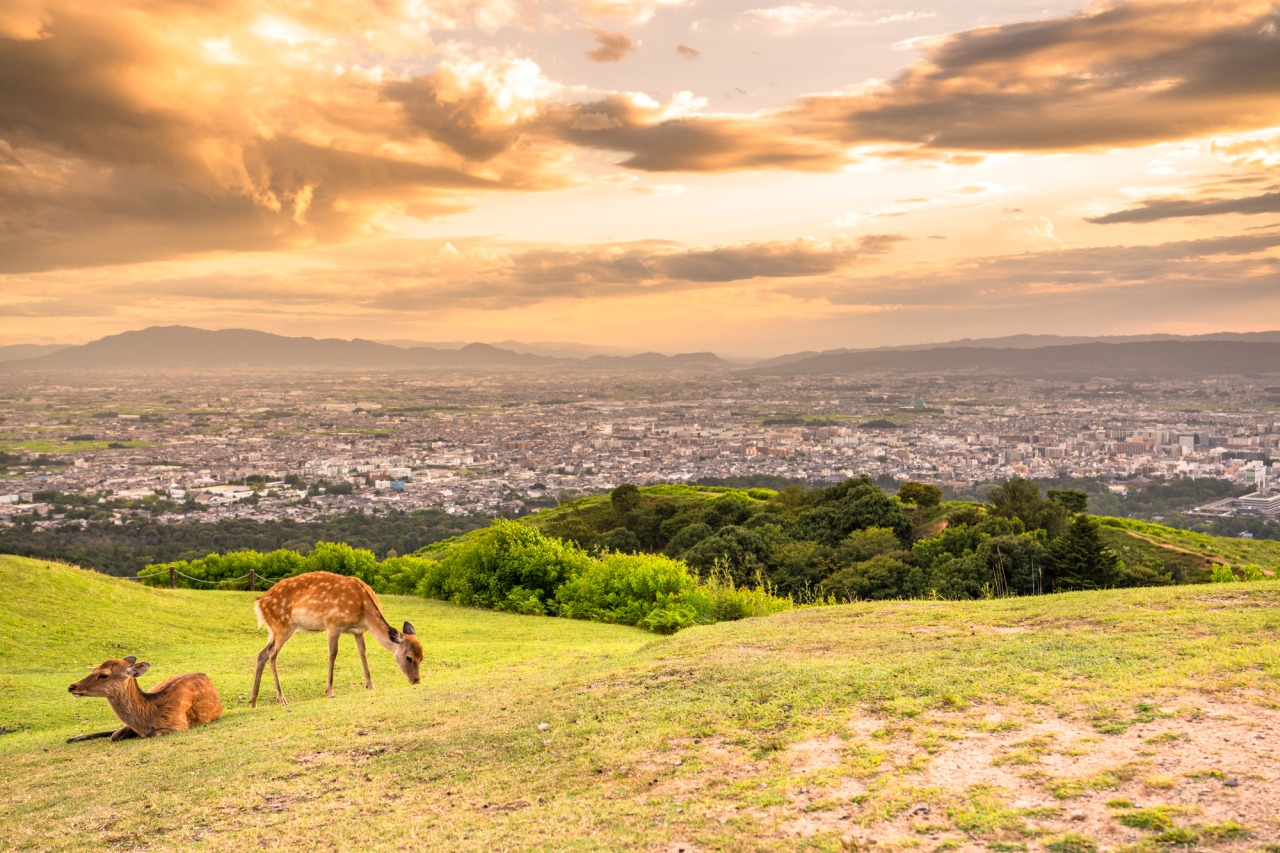
The season of birth for deer lasts from mid- May to July. The deer in Nara are wild animals and normally, they will hide among the bushes for about 2-3 weeks after giving birth. However, as mother deer have a string maternal instinct and may sometimes attack when approached, a group known as the “Deer Care Group of Nara” will take care of pregnant deer in a protective facility known as Rokuen from around April where they will give birth so as to keep them away from the public during their pregnancy.
The mother deer and their newly-born babies will be open for public viewing in Rokuen from 1 Jun to 30 Jun. Please do take this opportunity to come see the adorable baby deer.

  • Date & Time: 1 Jun 2013 (Sat) – 30 Jun 2013 (Sun) 11:00 – 13:30
  • Venue: Rokuen within the grounds of the Kasuga Grand Shrine
  • Access: <On foot> About 30 minutes walking distance from Kintetsu Nara Station.

<By bus> Take the bus heading for Kasuga Grand Shrine Main Hall from the JR/Kintetsu Nara Station and alight at the end point, or the Nara City Loop Bus (outer loop) from JR/Kintetsu Nara Station and then walk for about 10 minutes after alighting at Kasuga Grand Shrine Omotesando.

  • Entrance fees (aid for supporting the care of the deers): Adults 300 yen (free for high school students and below)

bas

           Famous Wisteria Spots in Nara City      


[The Wisterias of Nanendo in Kofukuji Temple]
The Nanendo that is built within the grounds of the Kofukuji Temple, a World Heritage Site of the ancient capital of Nara, is the largest octagonal hall in Japan. Facing the building on the right hand side, there is a large wisteria tree which blooms purple flowers with white spots. This wisteria tree is one of the eight famous sights of Nara (the Todaiji bell, Kasuga Field deer, Nanendo wisteria, Sarusawa Pond moon, Saho River firefly, Kumoizaka rain, Todoroki Bridge traveler, Mount Mikasa snow).

  • Viewing time: Around late April – early May
  • Venue: On the right facing the Nanendo within the grounds of the Kofukuji Temple
  • Access: Walk for about 5 minutes from Kintetsu Nara Station, or take the city loop bus (outer loop) from the JR Nara Station and alight at Kenchomae in front of the Prefectural Office.


[The Sunazuri no Fuji of Kasuga Grand Shrine]
There is a wisteria trellis on the left side after passing through the south gate of the Kasuga Grand Shrine. It is an old historical tree that is more than 700 years old with long hanging tassels that almost reach the ground, from which its name was derived. The contrast of the light purple flowers with the vermilion of the main hall of the shrine evokes an elegant beauty.

  • Viewing time: Flowers will bloom for about 2 weeks in late April – early May
  • Venue: Kasuga Grand Shrine Main Shrine 
  • Access: Take the bus heading for the Kasuga Grand Shrine from JR/Kintetsu Nara Station and alight at the end point, or take the city loop bus (outer loop) and walk for about 10 minutes after alighting at Kasuga Grand Shrine Omotesando.

[Bontoten of Nara International Seminar House]
Potted wisterias in light purple, white and pink colors are exhibited. The most eye-catching one of them all is a large wisteria placed at the far end of the sliding door which looks like a beautiful picture framed by the border of the sliding door.

  • Date and time: April 18 (Thurs) – May 3 (Fri), 2013  9:30 - 16:30
  • Venue: Nara International Seminar House
  • Entrance fee: Adult (junior high school students and above) 400 yen, elementary school students 200 yen, infants free-of-charge
  • Access: Take the city loop bus (outer loop) from the JR/Kintetsu Nara Station and alight at Kencho Higashi.


The Famous Ancient Temples and Shrines of Nara Reflect the Everlasting History of Japan.

Nara was the glorious capital, "like a fragrant flower in full bloom," as an ancient poet once described it. Nara was the cradle of the great Japanese arts and the essence of culture in the long-ago Tempyo Period. The old, world-famous temples and shrines of the province of Yamato (presently Nara Prefecture) have handed down to us their precious history. Among others, the cathedrals of Todaiji, Kofukuji, Yakushiji, Toshodaiji and the Kasuga Grand Shrine are settings where one can encounter the rich, elegant ambience of the Tempyo Culture. As you go through the corridors, and glance at the tiled roofs of these cathedrals, the Tempyo Culture will make you forget all about time and space, and will whisper to you about the old days of well over a thousand years as though they were yesterday.


The Buddha in Nara

Nara is also a treasure-house of the Japanese arts. Since the introduction of Buddhism, the Buddhist Images played particularly important roles in creating special "Plastic Arts" in the artistic fields of Buddhism.
The formative (plastic) beauty of our country has been created from the change from the youthful appearance of the Hakuho Period through the gorgeousness and maturity of the Tempyo Period, the delicacy and grace of the Fujiwara Period, and finally to the vigorousness and animation of the Kamakura Period.
The standing dry lacquer figure of Ashura enshrined in the Kofukuji Temple, a masterpiece of the Tempyo Period; the standing Eleven-Headed Kannon (the Goddess of Mercy) enshrined at Hokkeji Temple, a representative product of the Jyogan Period, during which the craftsmanship of wooden carving was popular; and many other famous Buddhist Images are extant in the ancient city of Nara.
As one stars at the face of the Buddha, one gets the feeling that the statue will begin talking at any moment. It is probably true that the passion with which many people make wishes to the Buddha, are in the mind of the Buddha.


Significant Traditional Events in the Ancient City of NARA

As Nara is known as the home of Japanese history and culture, it is not surprising that its traditional events, which are carried out throughout the year, are indeed colorful.
From the Ceremonial Burning of Wakakusa-yama Hill (whose flames illuminate an evening sky in winter); to the Memorial Water-Drawing Ceremony of Nigatsudo (February Hall); through the summer performances of the Firelight Noh (the perfection of that art, performed with an open-air fire for a background); and the Kasuga Grand Shrine Lantern Lighting Ritual (in which about 3,000 stone and hanging bronze lanterns are all lit at once, forming a simple yet elegant atmosphere); to the Deer Antler Cutting Ceremony in the fall; it is no exaggeration to state that the four seasons are beautifully colored by the numerous traditional events that add a sweet innocence to the charm of Nara.


The Fragrance of the Four Seasons in Nara

Nara is the cradle of Japanese culture and the spiritual home of the Japanese people, keeping a beautiful harmony between history and nature.
In the spring, after the Water-Drawing Ceremony is over, the delicate cherry blossoms in the ancient city of temples and shrines begin to bloom all at once. Radiant greenness will cover the roof tiles of these cathedrals in the summer.
Later the ancient capital will be crowded with holiday-makers who seek the beauty of tinted autumnal showing the genuine nature of Nara.
The drama of Nara's four seasons undoubtedly paints its historical remains most colorfully and makes the elegance of an ancient city much more exquisitely attractive.


Arts and Crafts of Nara

Nara is the birthplace of the culture of Japan. Many traditional arts and crafts suited to the natural features and life style of Nara have been handed down to the present day. The techniques of the ancient artists who created the masterpieces designated as Important Cultural Properties have been preserved in this district. These refined techniques can be seen in the splendid works preserved in the Shoso-in (the depository for the treasures of Todaiji Temple) and various temples, shrines and museums. These works are not only magnificent, but also have a feeling of dignity and grace. The artists have given us works containing the essence of Nara, its culture, and its history. Traversing times the spirit of the artisan still exists.


pamphiet